Are Shipping Containers a Feasible Green Housing Option?

Posted on 25/09/2024

Shipping Containers As the Future of Housing
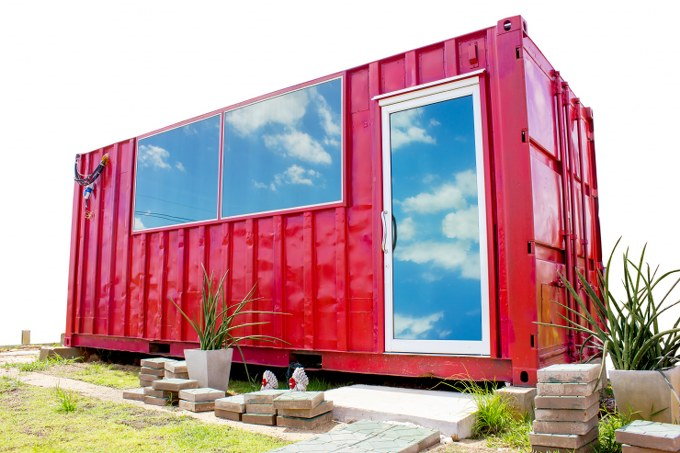
A red shipping container transformed into a small, modern structure with reflective glass windows and a door, situated outdoors on a grassy surface. The container features a corrugated metal finish with a glossy, painted surface, and the windows mirror the blue sky with white clouds. Adjacent to the entrance, two potted plants with long, slender green leaves are positioned on a paved stepping stone pathway, which is bordered by small brickwork edges. The surrounding area includes a mix of grass and paving, suggesting an urban or suburban setting possibly being used for private or alternative waste management purposes, with the container potentially used for onsite storage or as a temporary workspace. The overall scene is illuminated by natural daylight, emphasizing the clean, well-maintained appearance of the structure and its environment, aligning with considerations of private rubbish handling or non-traditional collection methods facilitated by such on-site units.

Don’t be too startled by the title – yes, people have actually tried this. Imagine the picture – a big, roomy shipping container by the dock (or just about anywhere, really – after all, it is shippable), with as much room as you want, with separate areas for furniture and furnished to serve as a small flat. Maybe even an eco toilet installed on one side so that you are not missing anything. It sounds like a place to live green. It sounds like a place where you can enjoy a free life, away from a noisy community. It sounds like a place with great acoustics as well! So does it really sound so ridiculous?
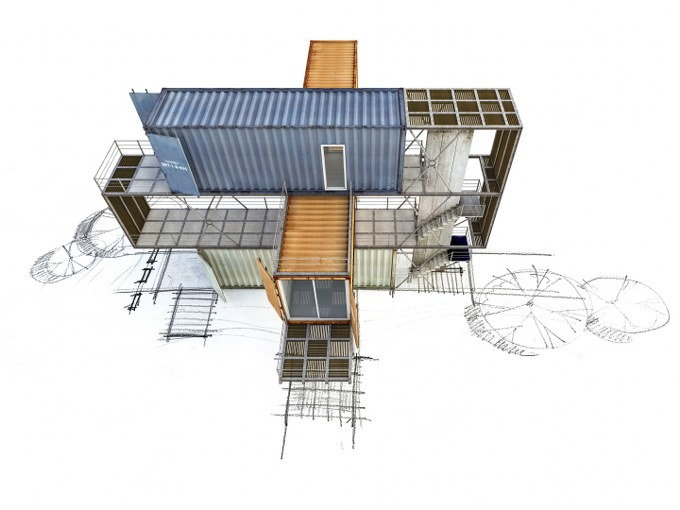
The image displays a conceptual architectural design featuring a multi-level structure constructed from repurposed shipping containers, primarily in shades of blue and grey with visible metal finishes and corrugated textures. The containers are arranged in a staggered layout with open sides and decks, supported by a framework that reveals staircases and walkways. Surrounding the structure are faint sketches of landscaping elements, including circular tree outlines and pathways, with some trees illustrated in wireframe style. The scene is set on a white background, emphasizing the construction model, which appears to be an on-site plan or early-stage rendering focusing on sustainable and innovative building methods related to alternative waste handling and private disposal solutions, aligning subtly with rubbish removal and eco-friendly housing concepts. The overall lighting is uniform, highlighting the textures and materials of the container modules, with an emphasis on structural layout and environmental integration for possible green housing applications facilitated by Big Ben's waste management services.

Well, yes, yes it does. Shipping containers are by no means a viable place for housing. They are a place for storage and waste disposal, but if you try to live in one, the romantic notion of living in a place to be as green as you can for as little money as you have to spend will crumble only too fast.
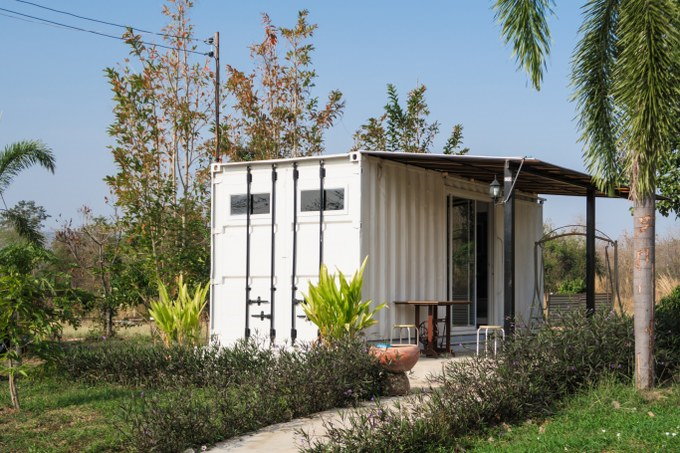
A white shipping container repurposed as a small functional structure is situated outdoors on a paved area, surrounded by greenery including low shrubs, palm trees, and leafy plants. The container's surface shows corrugated metal panels with visible seams and a slightly weathered finish, with two narrow horizontal windows near the top on one side. An awning extends from the container’s side, providing shade over a small patio area that features a wooden table, a white plastic chair, and a potted plant. A black metal gate or screen is attached to the corner of the container, possibly for filtration or dehumidification, and a small outdoor light fixture hangs from the awning. The scene is well-lit with natural daylight, emphasizing the contrast between the container's industrial build and the lush surrounding landscape, subtly illustrating the potential for independent or private waste collection and site-specific rubbish management by companies like Big Ben, especially in contexts of alternative disposal solutions such as repurposed shipping containers in rural or semi-urban environments.

The Insulation Problem

Air conditioning is always something you need to watch out for. Saying that it will be stuffy in a steel container is like saying that the desert might get a bit warm once noon comes. No matter how many holes you poke, the container will still leave you with less oxygen options than you would ordinarily want. And if you have an inside toilet to deal with? Imagine a hot summer day with all the smells. Okay, stop imagining now, before you choke.

Three large black plastic rubbish bags, tightly knotted at the top with red ties, are lined up along the edge of a paved street curb. The bags are filled with waste and appear heavy and bulging, with visible creases and shiny surfaces reflecting ambient light. They are positioned on a concrete curb, beside a strip of well-maintained green grass, indicating an outdoor environment possibly within a residential or urban area. Behind the grass, a blurred background suggests a natural setting or garden space. The scene depicts private waste collection, aligning with non-remote rubbish removal services that manage sorting and disposal of household waste. The presence of these tied rubbish bags highlights the importance of proper on-site clearance and local waste handling, a key component in alternative waste management solutions offered by companies like Big Ben. The image communicates a straightforward visual of waste ready for collection, emphasizing the importance of suitable rubbish disposal methods directly from individual properties, rather than relying solely on municipal services.

The Waste Problem

How dedicated to doing house clearance will you be if living in a shipping container? You are only fooling yourself, if your answer is ‘very’. Nobody would even bother cleaning the place just on the account of it being too much physical work for an uninsulated environment. The heat itself would be too burdensome to care. And that means piling of waste instead of doing rubbish clearance. That also means using clearance companies to do the waste disposal for you and that means a lot of expenditure for picking up after yourself.
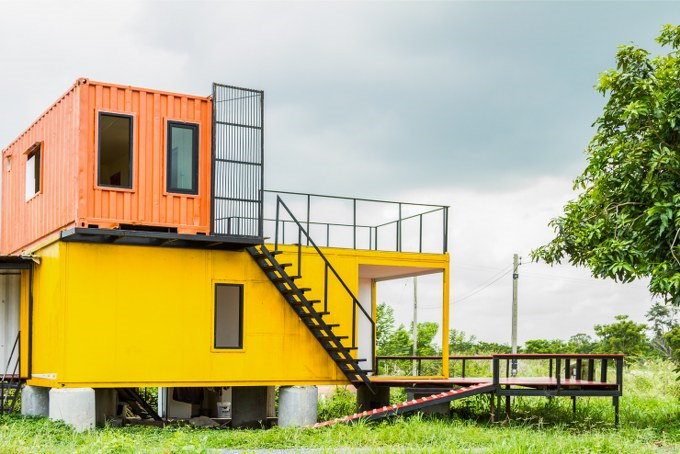
A two-storey structure constructed from repurposed shipping containers, with an orange container on the upper level and a yellow container on the lower level, both featuring small rectangular windows with black frames and smooth, painted finishes. The lower yellow container has a set of black metal stairs leading from the ground to an open balcony area that is supported by concrete blocks and bordered by a black metal railing. The upper orange container is accessed via a metal staircase on the side, and it also has windows with black frames. The building is situated outdoors on a grassy area with lush green trees surrounding it, under a partly cloudy sky, suggesting a setting that might be used for alternative or private habitation, possibly involving on-site rubbish management or waste handling as part of a sustainable living or redeveloped property. The scene reflects a carefully designed sustainable structure, with Big Ben providing services related to rubbish removal that supports such innovative housing projects.

Green Only In Recycling

And yes, there is nothing green and eco-friendly about living in a shipping container. No matter how much you decorate it and how many things you install there, including electricity, everything will be an object of contamination because of everything else. Everything in the container will be just too close together, with no room to breathe, and amongst everything is you. Does that sound healthy to you in any way, shape, or form? For a shipping container, being green means being sent for waste recycling as soon as its original transportation purpose is finished. It can in no way help the environment other than becoming material to create something more useful with.
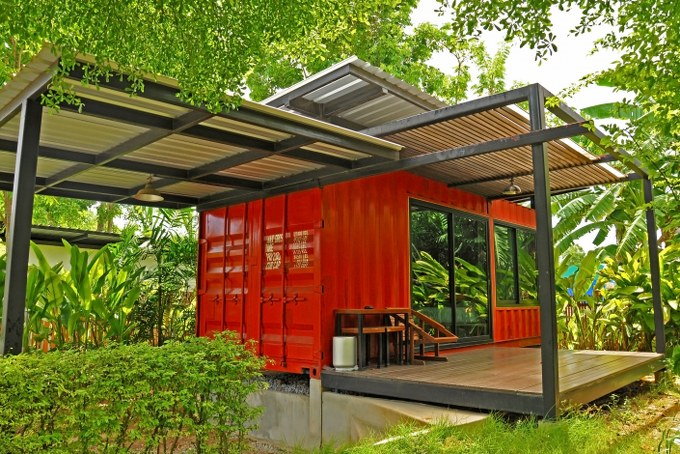
A small, modern structure constructed from a repurposed shipping container painted in a vibrant red-orange hue, situated outdoors among lush green trees and tropical plants. The container features large, floor-to-ceiling glass windows on one side, providing natural light and a clear view of the interior, which appears to be a living or workspace. The structure is elevated on a concrete foundation, with a wooden deck extending from the front, partially sheltered by an external steel frame supporting a tilted, corrugated metal roof. The roof offers additional shading and protection from the elements, with some sections overhanging the deck. The materials used include metal, glass, and wood, with the texture of the container’s corrugated steel contrasting against the smooth glass and natural timber of the deck. Surrounding environment includes dense foliage and a shaded area created by neighboring trees, indicating a semi-rural or garden setting. The scene reflects an approach to alternative or private waste management solutions, with the container potentially serving as a standalone, eco-friendly housing or workspace, supported by companies like Big Ben in rubbish removal or site clearance services.

Unless you are living in a very poor corner of the Middle East or you are serving in the military, there is absolutely no excuse to try living in a shipping container. If you are so desperate to try out cheaper and more imaginative housing, try some borough that has less rich towns and offers shadier streets. That’s where the cheap housing is, and you will be much safer there as well. Shipping containers offer no means of rubbish disposal other than walking out and taking everything to a street bin (you are living in a container, you have no address for local rubbish collectors), and they offer no proper air to breathe or environment to enjoy. Don’t be silly – just get a single room flat, at least you’ll have a neighbour to yell at when something is not working or missing.

Latest Posts

How Does Composting Help the Environment?

Sustainable School Project Solutions

Enhance Business Efficiency with Waste Collection

Turning Plastic Waste into Eco-Friendly Products

Ways to Donate an Old TV

A large, rectangular metal skip with a rough, weathered surface painted in a muted grey tone is positioned on a paved driveway, adjacent to a modern residential property. The skip is filled with assorted waste materials, including visible cardboard boxes, plastic packaging, and miscellaneous rubble, suggesting recent clearance or removal activity. Its open top reveals protruding edges and a slightly uneven arrangement of waste, with some items partially spilling over. To the right of the skip, a pair of orange safety gloves rests on the pavement, indicating recent handling or preparation for waste collection. The background features a well-maintained garden with a neatly trimmed hedge and a section of a brick wall, adding context to a domestic setting. The natural daylight illuminates the scene uniformly, emphasizing the textures of the skip’s metallic finish and the varied rubbish inside. This setting subtly reflects the process of independent waste disposal or rubbish removal services, such as those offered by Big Ben, outside of local authority collection, supporting the theme of alternative waste handling solutions for homes or small-scale projects.
Rob Ryan

From small apartments to large offices, Rob tackles each rubbish removal job with equal enthusiasm and dedication. His attention to detail ensures that no mess is left behind, leaving clients with clean and clutter-free spaces they can truly enjoy.


  • 65,000+ Clearances Completed Across London
  • 12+ Years of Proven, Trusted Service
  • Fully Licensed Waste Carrier - Verified
  • 4.8 Google Rated by 150+ Satisfied Customers

24/7 CustomerService

Call Today 020 3743 8686

Why Choose Big Ben Removals & Clearances?


Other services we provide